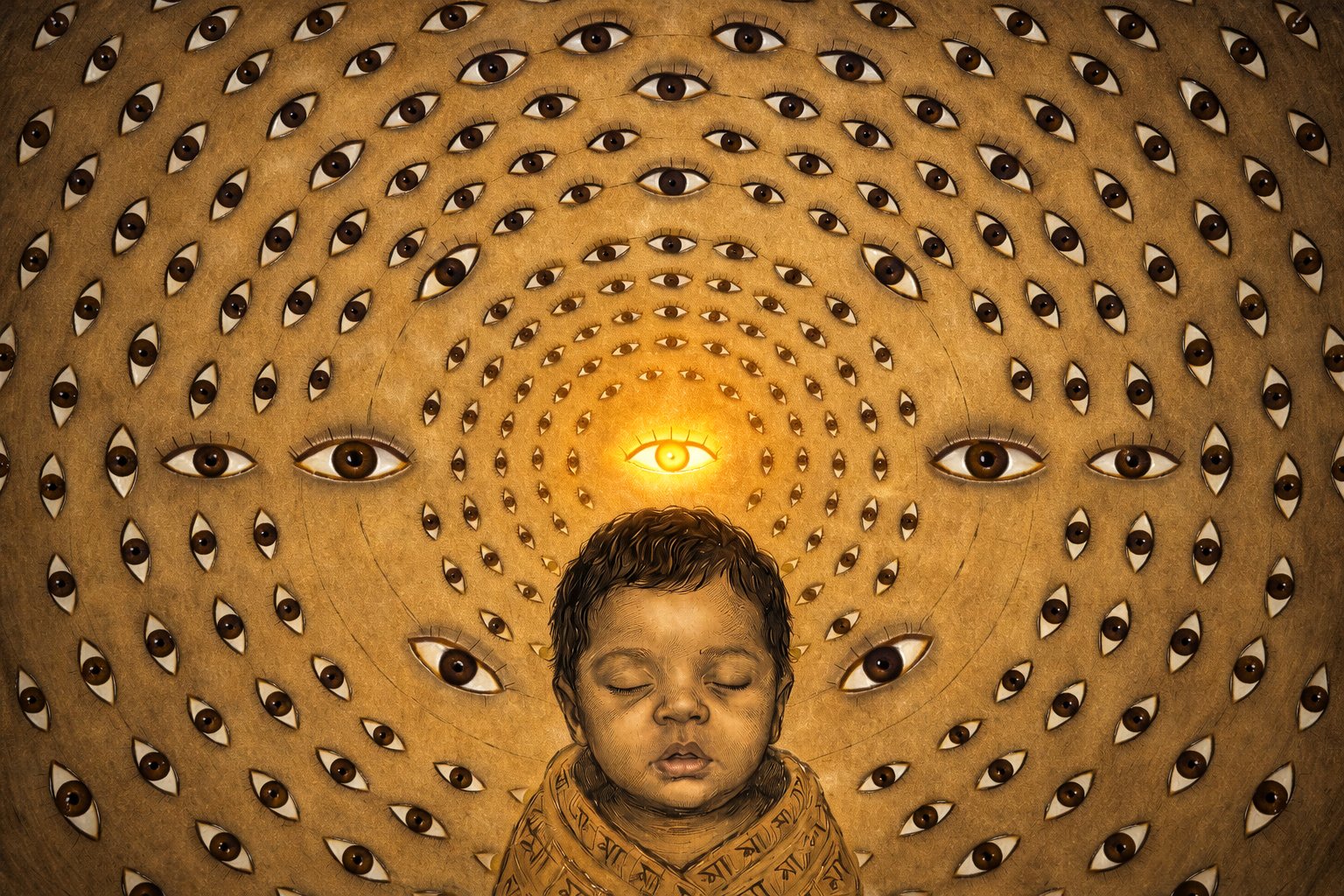
The Orphan
Paradox
The person who could prove I existed is the one who disappeared.
Passages
"Above the rows of cots, a ceiling fan turned slowly, its rhythm the only sound. The air was thick with the city's breath through the windows. When one baby cried, the others answered, and then the room went quiet again. Too few hands for the crying, too many souls left searching for the world that never came back."
My mother abandoned me at birth. The moment she did, I began to row.
Abandoned by her, abandoned by God, I found myself alone in the middle of the sea. The constellations blurred. The oars were heavier than they should have been.
In the absence of meaning, motion became my proof.
A mother is the one presence we are all promised. When she leaves, something primal in creation unravels. When God allows it, the absence becomes absolute.
This is not a story about being saved. It is about the oars I cannot put down, and the discovery that the motion I thought was saving me was the thing drowning me.
Some mornings the quiet is unbearable. The absence of God and mother opens up like a canyon. I stand at the edge wondering if the fall would feel like coming home.
The rowing proved nothing except that I could row. The stillness is teaching me something harder: I might be worth more than my movement.
I am not there yet.
The deepest wound isn't abandonment. It's erasure.
Orphans understand love the way astronomers understand distant stars — through observation, through the certainty that it exists, but never through its warmth. By the time its light reaches us, the source is already gone.
For forty-three years, I have been looking for a woman I will never find. Not looking the way you look for someone in a crowd, scanning faces, hoping for recognition. Looking the way the ocean looks for the shore. Constantly, without thinking, in every direction at once.
She is the first thing underneath every feeling I have ever had. Underneath the anger, underneath the performance, underneath the love I couldn't let in and the love I gave too freely. Underneath all of it: Mom.
Not a person. I have no person. No name, no face, no voice.
She is not someone I remember. She is something I feel. A pull in the body that has no destination. I have carried it into every room I have ever entered, every relationship I have ever built, every silence I have ever sat in.
It does not fade. It does not resolve. It simply continues, the way breathing continues, without permission and without end.
I had spent forty-three years on one side of the wound. The side of the child who was left. And for one moment I stood on the other side and saw what it looked like from there. Not better. Not worse. Just impossible.
I understood then why the "I'm sorry" had come so loud. Why it kept rising, session after session, preverbal and relentless. I had always assumed it was mine. My apology to the world for needing too much, for existing, for being the baby who wasn't worth staying for.
But maybe it was hers.
Maybe the first thing my body ever absorbed was not the silence of abandonment but the sound of a mother's grief. Her sorry, pressed into me before I had ears to hear it, before I had language to hold it.
I had been carrying her apology inside my body for forty-three years, mistaking it for my own guilt.
I need to know I existed.
She is in how I look at people now. The way light lands. The way I try to stay. Witnessing the breaking without rushing toward a fix.
There was a day the floor came out. The body went first. Then the breath. Then a ringing so deep it became silence. She stayed. That is not a small thing — to witness a self dissolve and not look away. Love is not rescue. It is remaining.
I am still being built from that ash. From a self that never got to form before it had to survive.
Each session brings me closer to liberation. Each session takes me closer to a loss I cannot stop. Another mother. Different terms. The body already knows. I cannot hold both; I cannot let either go. So I carry them.
Grief and liberation are the same water. One drowns you. One holds you up. I am still learning which is which.
The orphan who had no address for his love is learning to deliver it. One person at a time. In the places where someone just needs to be seen. Without being saved. Just witnessed.
Choose her.
Disappear.
Choose myself.
Betray her.
Hold both.
Survive.
Every orphan learns the same impossible arithmetic early: if the person who made me couldn't love me, what does that say about me? The question doesn't go away. It migrates. It becomes the organizing principle of a life.
This book is the record of what happened when I finally stopped rowing long enough to ask a different question: not why wasn't I chosen? but what have I been carrying all this time, and is it actually mine?
What I found is that the orphan wound is not an absence. It is a presence. A surplus of love that had nowhere to land.
The hypervigilance built for survival became the capacity to truly see people. The suffering, once witnessed, became the beginning of something else entirely.
The Orphan Paradox
A literary memoir tracing one adoptee's journey from survival to witnessing: through IFS therapy, the search for a birth mother, and the slow discovery that the question itself was wrong. For orphans and adoptees first. For everyone else, a way in.
Join the WaitlistHow to Enter
The book, the community, and the institute. Each a different door into the same room.
A podcast is coming — conversations with adoptees, clinicians, and researchers.
A literary memoir. The full accounting. For those ready to sit with what the wound actually is.
Join the WaitlistFor adoptees and orphans looking for a starting place. Write to us. We read every message.
Get in TouchA center for the treatment, study, and advancement of orphan and adoptee experience. Coming to Berkeley. Help us build what we needed and couldn't find.
Learn More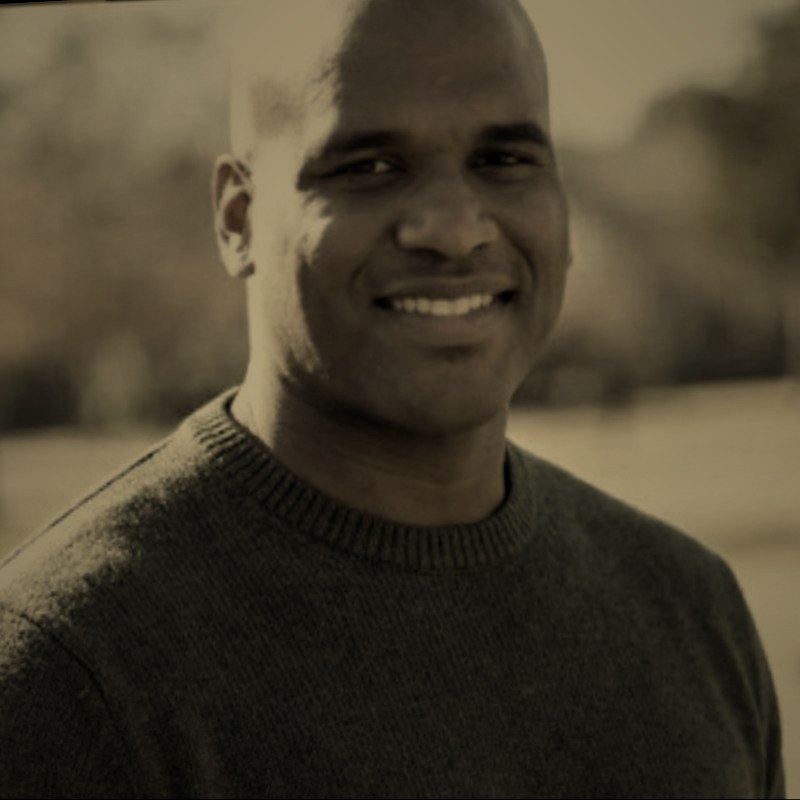
I was born in Kolkata, India, and left at the door of an orphanage before I had a name. There is no record of my birthday, so I was given one.
The name I was given at the orphanage was Ajit. When I was adopted, I was given another, a foreign name for a foreign country. I am returning to Ajit. It is the only name that was ever truly mine.
For most of my life I understood my origin as a deficit — something missing, something owed, a hole where a story should have been. I built around it. I succeeded around it. I loved people around it. The hole remained.
What I found, after years of work with a woman who had chosen, her whole life, to stay in the room — with infants who had no language for what they'd lost, with adults whose bodies still held what words could never reach, with everyone the world had asked to disappear quietly — was this: the wound was never an absence. It was a presence. A surplus of love that had nowhere to land. A god-sized hole that no human answer was ever meant to fill.
Her fingerprints are all over how I witness others.
This book is the record of what happened when I finally stopped rowing.
The Lighthouse Institute exists because of what that room made possible.
I am an orphan, an adoptee, an entrepreneur, and the steward of The Lighthouse Institute — a center for the treatment, study, and advancement of orphan and adoptee experience, being built in Berkeley, California.
The Orphan Paradox is my first book.
For the orphans who were born without a floor.
Ajit
সান্ত্বনার চেয়ে সত্য